
Building the Sustainable Digital Infrastructure of the AI Era
The digital economy is entering a new phase. Cloud, IoT and, above all, artificial intelligence are reshaping not only the volume of data, but also how it needs to be processed, moved and accessed. In this context, data centers are no longer just supporting facilities: they are becoming core components of global digital ecosystems.
At the same time, the market landscape is evolving rapidly. The demand for high-density computing, direct interconnection with cloud providers and ultra-low latency is increasing, alongside a growing focus on sustainability. This is where one of the key challenges of the industry lies: combining growth with environmental responsibility.
Rethinking data center sustainability
Today, sustainability in data centers requires a systemic approach. It is no longer just about reducing energy consumption, but about redesigning the entire architecture: from energy sourcing to cooling systems, and from infrastructure design to integration with networks and cloud platforms.
Advanced technologies are already moving in this direction. The adoption of renewable energy, continuous improvements in operational efficiency and the use of next-generation cooling solutions - driven in part by AI workloads - are becoming standard. At the same time, automation and AI-driven operations (AIOps) enable real-time optimization of both performance and energy consumption.
There is, however, a further step: sustainability is not only achieved within individual facilities, but also through the ability to integrate infrastructures and avoid duplication and inefficiencies.
Our approach: integration and interconnection
This is the foundation of Sparkle’s model. Its data centers are not designed as standalone assets, but as nodes within a global platform that combines compute, connectivity and direct access to digital ecosystems.
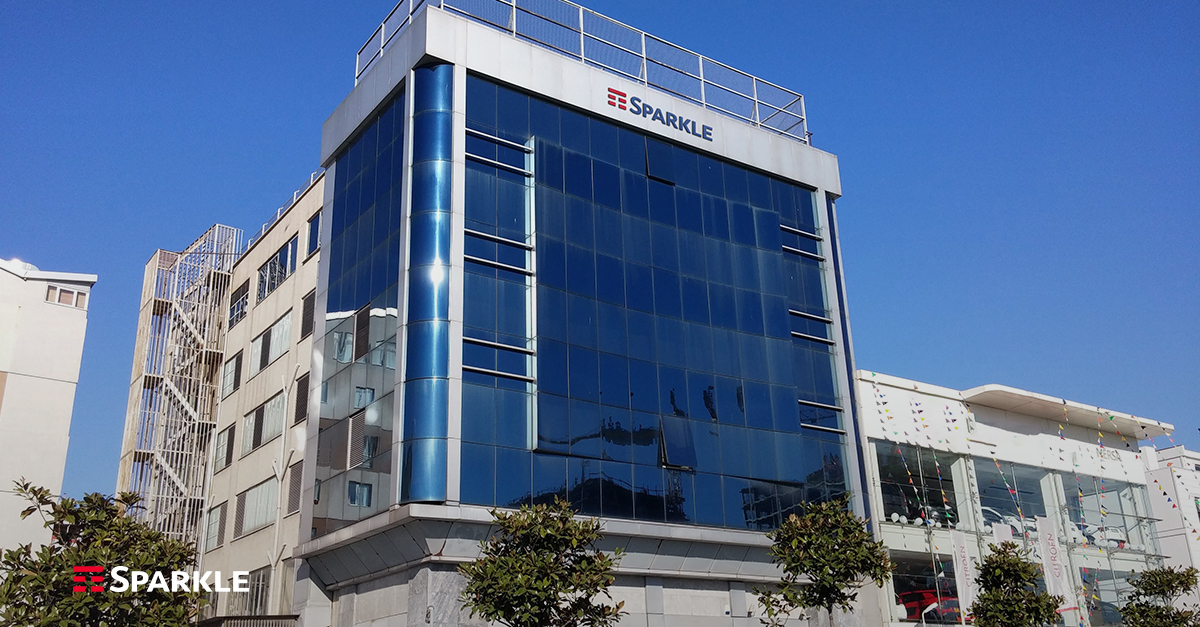
Sparkle currently operates a global footprint of 10 data centers - three in Italy, four in Greece, one in Turkey, one in Israel and one in Panama - all interconnected through its proprietary fiber network and the Tier-1 IP backbone Seabone.
This architecture enables more than traditional colocation, providing direct access to high-speed international connectivity, global cloud providers, a dense ecosystem of operators and digital platforms.
In this model, value is no longer defined solely by compute capacity, but by the density of interconnections a data center can enable.
Efficiency by design
Sustainability is embedded into Sparkle’s data centers from the design phase. This means working across multiple dimensions: continuous modernization of equipment, advanced cooling technologies, intelligent energy monitoring and high-density modular infrastructure.
Solutions such as evaporative free cooling, lithium-ion batteries, optimized building thermodynamics and low-energy lighting contribute to improving overall efficiency. At the same time, automation-driven operations allow infrastructure behavior to adapt dynamically in real time.
This approach is particularly relevant for artificial intelligence workloads, which require higher power density and more sophisticated energy management.
Metamorfosis II: a benchmark for efficiency
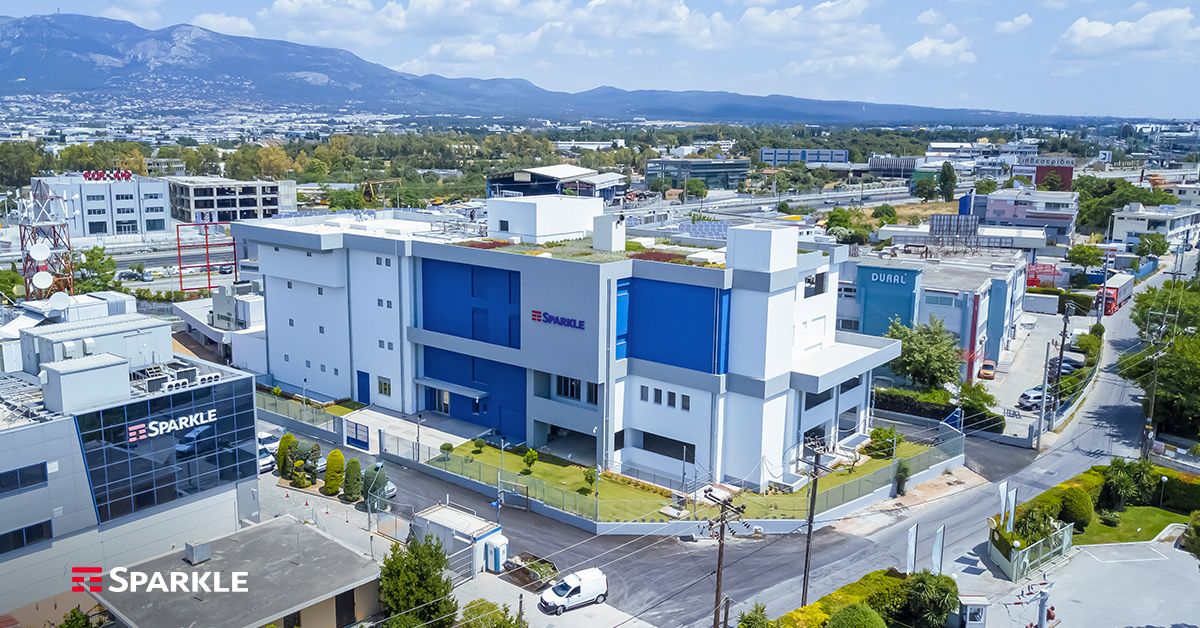
A clear example is Metamorfosis II in Athens, the first “green” data center in Greece and one of the most advanced in Europe.
Designed with high-efficiency technologies and evaporative cooling systems, it achieves top-tier energy performance. The facility integrates innovative solutions such as lithium-ion batteries and geothermal systems, and is built to ensure high standards of reliability, security and sustainability.
It demonstrates how technological innovation can translate into both environmental and operational benefits.
Genoa and Italy: sustainability at ecosystem level
While Metamorfosis II showcases technological excellence, Italy highlights Sparkle’s system-level approach to sustainability.
The data center in Genoa, part of the Genoa Landing Platform, is designed as a neutral and scalable hub for submarine cable landings. It already hosts systems such as BlueMed, Blue & Raman, Unitirreno and Barracuda, and is engineered to accommodate additional cables in the future.
This model allows infrastructure to be consolidated, reducing duplication and optimizing traffic management, with benefits in both efficiency and environmental impact.
Alongside Genoa, Palermo and Milan play key roles. The Sicily Hub acts as a natural bridge between Europe, Africa and the Middle East, while Milan serves as a major aggregation point for international connectivity and cloud ecosystems. It will also host the landing of GreenMed, further strengthening Italy’s position in global digital routes.
Panama: a hub between two oceans
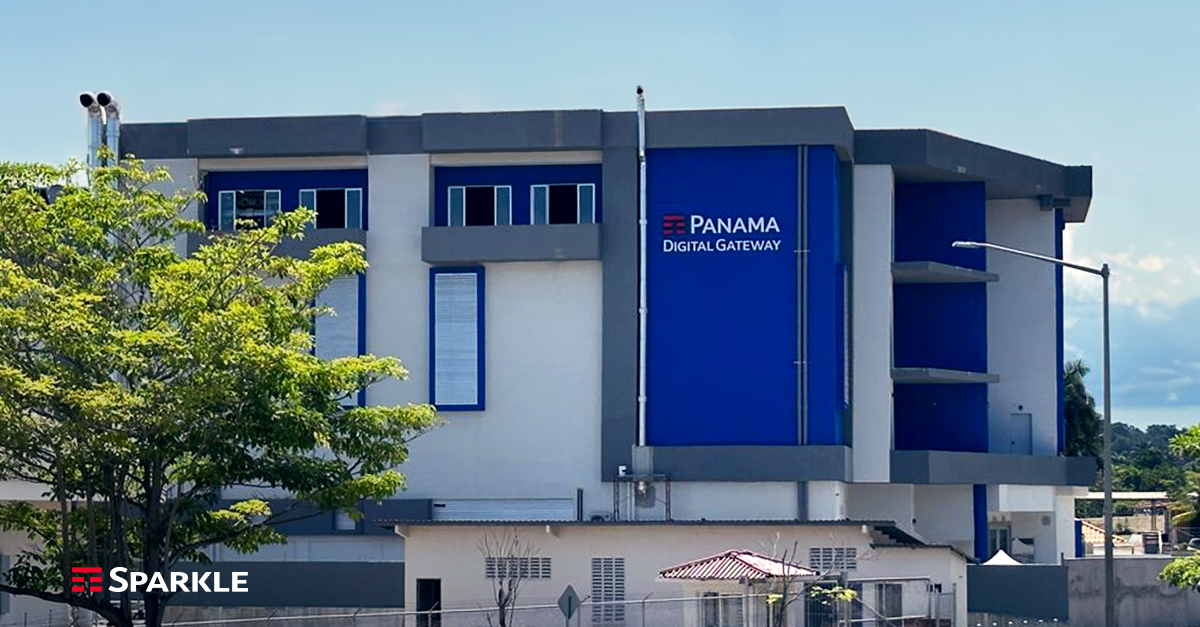
The same model extends to the Americas with the Panama Digital Gateway.
Already connected to the Curie system and with future integration with Manta, the facility is positioned as a strategic interconnection point between North and South America, and between the Atlantic and Pacific oceans.
More than a data center, it acts as an enabling platform for regional digital growth.
Toward a global infrastructure for AI
Artificial intelligence is accelerating this transformation. It requires denser, more efficient and more interconnected infrastructure. In response, data centers are evolving into active nodes within a global architecture where compute, connectivity and sustainability are designed together.
The direction is clear: building digital infrastructure that can scale without proportionally increasing its environmental impact.
In this context, competitive advantage will no longer depend solely on capacity, but on the ability to use it efficiently, sustainably and in an interconnected way.
Explore our Data Centers & Hubs
Discover our ESG initiatives
Contact us for more information